 ChatGPT
 Claude
 Gemini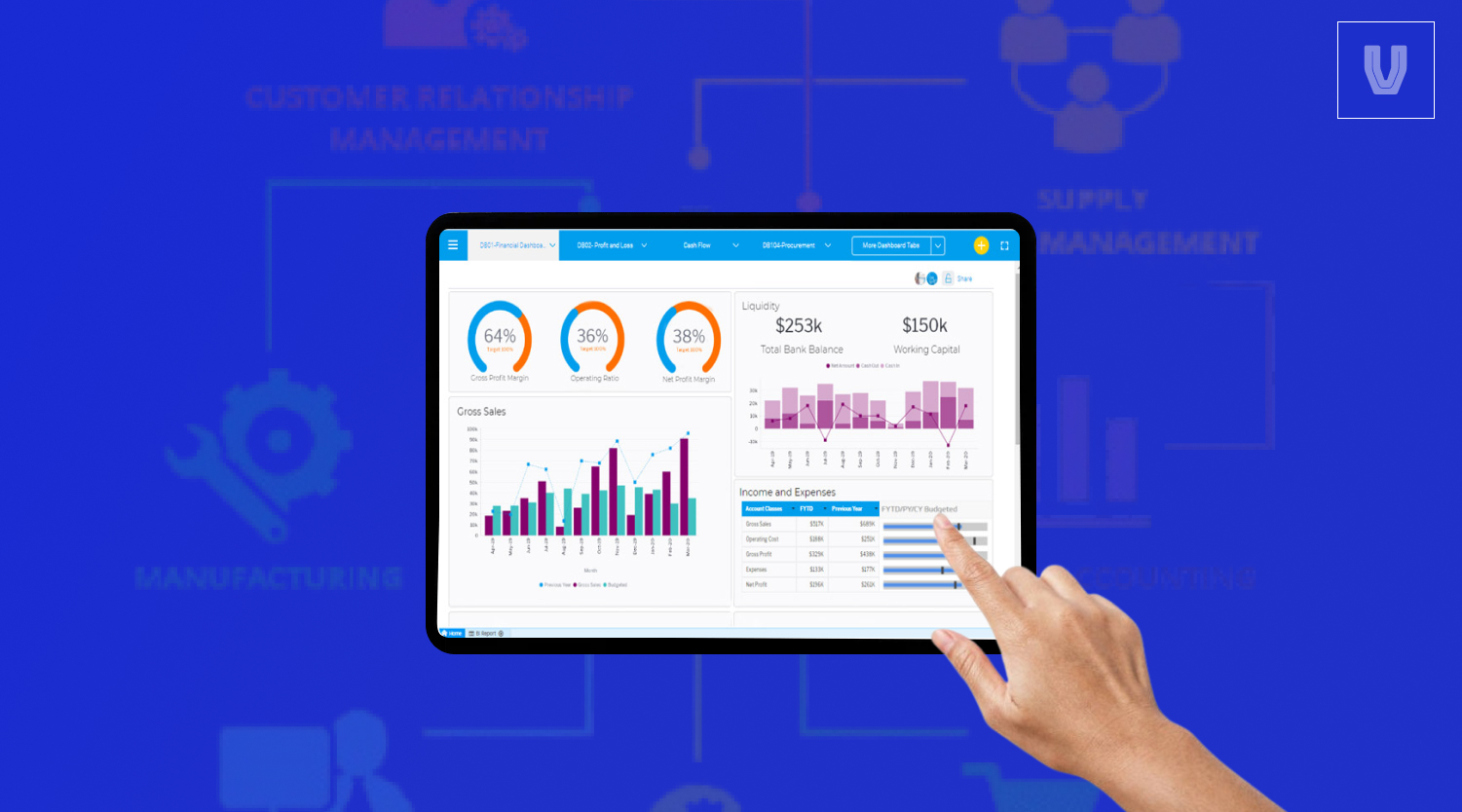
Most marketers treat Enterprise Resource Planning (ERP) software like any other SaaS product. They launch broad LinkedIn ads, write generic "efficiency" blog posts, and wait for the leads to roll in.
The result? Crickets.
Most small and medium business (SMB) owners don't wake up thinking, "I need an ERP today." They wake up thinking, "My inventory is a mess," "Why is my accounting taking three days?" or "I have no idea if we made a profit this month."
If you are trying to sell ERP software to SMBs in 2025 using the old "enterprise" playbook, long whitepapers, complex jargon, and 6-month sales cycles, you are going to struggle. SMBs buy differently. They move faster, fear complexity, and care about immediate ROI, not five-year digital transformation roadmaps.
Through this article, I’ll unpack exactly how to shift your marketing strategy to connect with SMB decision-makers who are desperate for a solution but terrified of the implementation.
Concepts discussed in this article
The "Pain-Point" Pivot: Why you must stop selling "ERP" and start selling solutions.
The 2025 Trust Factor: How to use social proof effectively for skeptical buyers.
Content That Converts: A breakdown of the exact content types SMBs actually read.
Channel Strategy: Where to find decision-makers (hint: it’s not just LinkedIn).
The "Free" Trap: Why freemium models often kill ERP sales and what to offer instead.
The "Pain-Point" Pivot: Stop Selling ERP
Here is the hard truth: "ERP" is a scary word to a small business owner. It sounds expensive, complicated, and disruptive.
Big enterprises have IT departments to manage ERPs. SMBs have Dave, the operations manager, who is also the HR rep and partial IT support. If your marketing screams "Comprehensive Enterprise Resource Planning Solution," Dave is going to keep scrolling.
What to do instead:
Market to the specific bleeding neck problem.
Don't say: "Integrated financial and inventory management modules."
Say: "Stop manually entering Shopify orders into QuickBooks."
Don't say: "End-to-end supply chain visibility."
Say: "Never run out of stock on your best-sellers again."
This principle applies even more strongly in niche verticals. A pharmacy owner, for example, isn’t searching for ERP features; they’re trying to avoid stockouts, expired medicines, and compliance headaches. That’s why positioning matters when marketing something like pharmacy management software, where the message must focus on real operational relief rather than abstract system capabilities.
You need to speak their language. For a deeper dive on why this vocabulary shift matters, check out this guide on what ERP actually is and how it streamlines workflows to see the difference between technical definitions and practical benefits.
The Content Engine: What Actually Works for SMBs?
In 2025, generic blog posts like "5 Benefits of ERP" are dead. AI writes those now. To stand out, your content marketing needs to be radically practical.
1. The "Day in the Life" Case Study
Forget the 20-page PDF case study. SMB buyers want relatable stories.
Create content that shows a "Before vs. After" scenario.
Before: "How ABC Manufacturing spent 15 hours a week on spreadsheets."
After: "How they cut that to 2 hours and shipped 30% more product."
2. Transparent Pricing Pages
This is controversial, but essential for SMBs. If your website says "Contact for Quote," you are losing 60% of your SMB traffic instantly. They assume you are too expensive.
Even if you can't give an exact price, give a range. "Plans starting at $300/month" or "Typical implementation costs between $3k–$6k" builds massive trust.
3. Implementation Calculators
Fear of implementation failure is the #1 reason SMBs don't buy. Create a simple tool or blog post that calculates "Time to Launch." Show them it takes weeks, not years.
Scale Faster and Smarter with Vaphers
From visibility to conversions, Vaphers builds high-performance digital systems designed to attract, convert, and scale your revenue consistently.
Channel Strategy: Where are the Buyers?
You might think LinkedIn is the only place for B2B, but in 2025, the lines are blurring.
Niche Communities & Forums
SMB owners hang out in specific places to vent about their problems.
Reddit: Subreddits like r/smallbusiness, r/logistics, or r/accounting are goldmines for listening to complaints.
Industry Facebook Groups: Yes, really. Manufacturing owners, 3PL executives, and retail founders are highly active in private Facebook groups.
Video Marketing (YouTube & Shorts)
YouTube is the second-largest search engine. When an operations manager gets stuck, they search "how to manage inventory better".
Create short, 2-minute videos showing exactly how your software solves a specific task. "How to generate an invoice in 3 clicks" is a better marketing asset than a high-production brand video.
The "Free" Trap: Why Freemium Fails in ERP
In SaaS, "Freemium" is the golden standard. In ERP, it’s often a death trap.
ERP software requires setup. If you give a user a free account with no data and no setup, they will log in, see an empty dashboard, feel overwhelmed, and churn immediately.
The Alternative: The "Concierge" Pilot
Instead of "Free Trial," offer a "Guided Pilot".
"Give us your data (in messy spreadsheets), and we will upload it for you for a 14-day trial."
When they log in, they see their customers and their products. That is the "Aha!" moment.
Agencies facing similar setup challenges often use a dedicated project management tool for agencies to handle client onboarding smoothly. This same logic applies to ERPs, don’t just give them the tool, give them a structured path to success.
If you follow any of my advice, let it be this
Stop trying to sound like a Fortune 500 vendor.
Be human: Use plain English.
Be transparent: Show your pricing (or ranges).
Be helpful: Solve a specific problem in your ads, don’t just list features.
Marketing ERP to SMBs in 2025 isn't about convincing them they need software; it's about convincing them that your software won't ruin their business during the transition.
Build trust, show the "after" state clearly, and make the first step incredibly safe. That is how you win in the SMB market.
About the Author: Muhammad Asad
Digital marketing strategist, SEO consultant, and technology writer contributing insights on search engine optimization, full-stack web development, and digital brand acceleration.