 ChatGPT
 Claude
 Gemini
The healthcare industry has undergone a massive digital transformation. Patients no longer rely exclusively on referrals from family or other physicians to find medical care. Instead, they turn to search engines the moment they experience a symptom or need a specialist. When a prospective patient searches for a cardiologist near me, urgent dental repair, or pediatrician accepting new patients, they are displaying high commercial intent. They are ready to book an appointment right then and there.
If your practice does not appear at the very top of those search results, you are conceding a steady stream of new patients to competing clinics in your area. While organic search engine optimization takes months to build authority, pay-per-click advertising places your clinic at the top of the page immediately. For medical practices looking to scale rapidly, mastering Google Ads for doctors is no longer optional; it is a critical driver of practice growth and patient acquisition.
Why Google Ads for doctors Are Highly Effective?
Unlike traditional billboard or radio advertising, paid search targets individuals based on exact intent. You are not paying to broadcast your medical services to a broad audience who may never need them; you are only paying when someone actively searching for your specific medical expertise clicks on your advertisement.
This level of precision requires a strong foundation in digital advertising principles. If your clinic is entirely new to this acquisition channel, establishing a baseline understanding of what PPC marketing is and how it helps businesses will clarify why this investment yields such a high return. By bidding on highly relevant medical terms, your practice bypasses the long wait times associated with organic ranking and immediately captures high-intent traffic.
However, running a successful campaign in the medical sector requires more than just throwing money at a few keywords. The healthcare vertical is highly competitive, cost-per-click (CPC) rates can be expensive, and Google enforces stringent policies regarding medical advertising. To ensure your budget is actually converting clicks into booked appointments, you need a meticulous, structured approach.
Developing a Winning Google Ads for Doctors SEO Outline
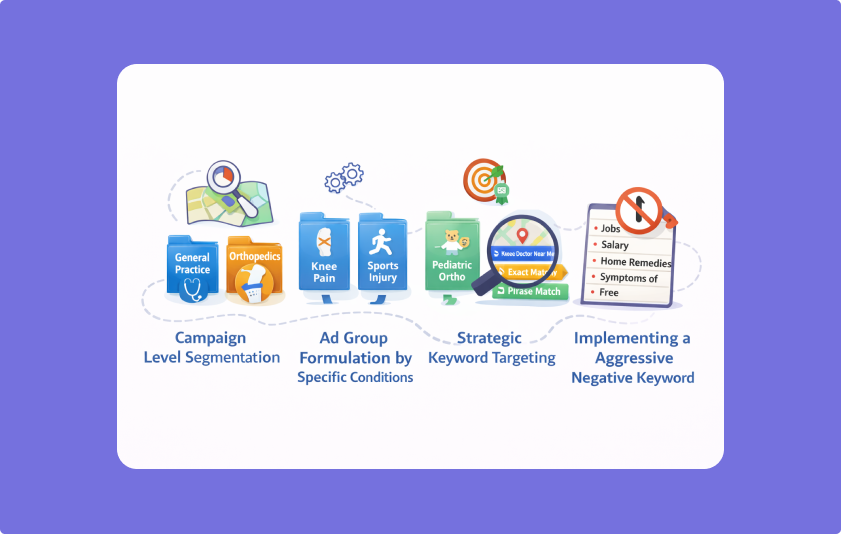
To achieve both immediate paid visibility and long-term organic dominance, forward-thinking practices align their paid search structure with their organic content strategy. Building a comprehensive Google Ads for Doctors SEO Outline ensures that the keyword data you harvest from your paid campaigns directly informs your website’s organic content architecture.
Here is the structural outline you should use to architect both your Google Ads account and your clinic's landing pages:
1. Campaign Level Segmentation by Medical Specialty: Never lump all of your medical services into a single campaign. Your campaigns must be segmented by broader specialties or clinic locations so you can allocate budget precisely.
Example Campaign 1: General Practice
Example Campaign 2: Specialized Treatments (e.g., Orthopedics, Dermatology)
Example Campaign 3: Brand Name (Bidding on your specific clinic name to protect against competitors)
2. Ad Group Formulation by Specific Conditions and Treatments: Within each campaign, break down the ad groups into highly specific treatments. This allows you to write ad copy that perfectly matches the user's search query. If someone searches for "ACL tear treatment," they should see an ad specifically about ACL tears, not a generic orthopedics ad.
Ad Group A: Knee Pain Specialists
Ad Group B: Sports Injury Clinic
Ad Group C: Pediatric Orthopedics
3. Strategic Keyword Targeting and Match Types: Focus heavily on long-tail keywords and localized terms. Broad match keywords in the medical field will drain your budget on informational queries (e.g., someone searching "why does my knee hurt" instead of "knee doctor near me"). Utilize phrase match and exact match targeting to ensure you only pay for transaction-ready searches.
4. Implementing an Aggressive Negative Keyword List: This is where most medical practices bleed budget. You must filter out job seekers, researchers, and people looking for free advice. Add negative keywords like "jobs," "salary," "resume," "home remedies," "symptoms of," and "free." By blocking these terms, you ensure your ads only trigger for users seeking professional medical intervention.
Navigating Healthcare Advertising Restrictions and Compliance
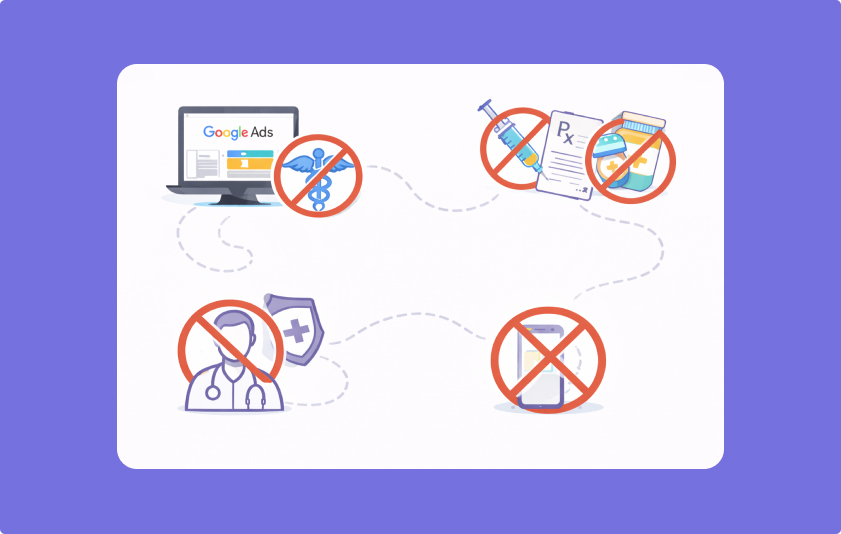
The medical field faces unique hurdles on Google Ads. Google’s personalized advertising policies severely restrict how you can target users based on their personal health conditions.
Retargeting (showing ads to people who previously visited your website) is largely prohibited for healthcare providers. Google does not want users to feel like their private medical conditions are being tracked across the internet. Therefore, your first point of contact, the initial search ad, must be highly compelling because you may not get a second chance to advertise to that specific user via display remarketing.
Additionally, certain terms are restricted or require special certification. Addiction treatment centers, online pharmacies, and clinics promoting certain prescription drugs (like Botox or specific weight-loss medications) must undergo verification processes. Your ad copy must focus on the professional services and treatments offered by your clinic, rather than making guarantees about health outcomes or utilizing sensationalized medical claims.
Optimizing Landing Pages for Patient Conversion
Driving a prospective patient to your website is only half the battle. If an ad for "urgent root canal" directs a user to your dental clinic's generic homepage, they will likely bounce. Every specific ad group needs a dedicated landing page.
These landing pages must prioritize user experience and conversion rate optimization (CRO). The page should load in under three seconds, feature a clear and clickable phone number at the top of the screen, and include a simple appointment request form above the fold. Include social proof, such as patient testimonials and doctor credentials, to build immediate trust. By aligning the keyword, the ad copy, and the landing page experience, you dramatically lower your cost-per-acquisition.
Tracking Metrics That Actually Matter

Many clinics make the mistake of focusing on vanity metrics like "impressions" or "click-through rates." While these are important indicators of ad health, the only metric that truly dictates the success of a medical campaign is the Cost Per Acquisition (CPA), specifically, the cost to generate a booked appointment.
To track this accurately, you must implement robust conversion tracking. This includes tracking form submissions on your website and utilizing dynamic call tracking to record which specific keywords lead to inbound phone calls. Since a large percentage of medical appointments are booked over the phone, failing to track call conversions means you are flying blind with your budget optimization.
Managing the complexities of HIPAA-compliant tracking, negative keyword refinement, and bid adjustments often requires dedicated expertise. For practices aiming to scale without wasting ad spend on trial and error, partnering with a specialized google ads management agency ensures your campaigns are structured for maximum profitability from day one.
Executing Your Patient Acquisition Strategy
Your next immediate action is to audit your current patient intake channels. Identify the highest-margin treatments your clinic provides and conduct localized keyword research to determine the search volume for those services in your geographic radius. Draft three distinct ad variations for your top service, ensuring the copy highlights your unique value proposition, whether that is same-day appointments, specific insurance acceptance, or specialized technology. Launch your initial campaign using exact match keywords, monitor the search terms report daily to aggressively filter out irrelevant traffic, and adjust your bids based on which devices and times of day generate the highest volume of confirmed patient bookings.
Get started with Google Ads for your medical practice today
Investing in Google Ads for doctors is a great way for you to start boosting your clinic's visibility in search results. You’ll capture high-intent searches and drive more qualified patient traffic directly to your practice.
If you need help getting started with PPC for healthcare, Vaphers is here to help. With our specialized medical marketing approach, we can help you track and measure your ad performance to ensure you’re getting the maximum return on your investment.
We’ll help you develop a Google Ads campaign that drives real patient bookings.
We have a proven track record of maximizing return on ad spend and driving consistent, high-value appointments for our clients.
Ready to scale your clinic? Contact today to get started online with a free consultation, or call us at +91 964 186 1932 to speak with a strategist about our Google Ads management services!
About the Author: Muhammad Asad
Digital marketing strategist, SEO consultant, and technology writer contributing insights on search engine optimization, full-stack web development, and digital brand acceleration.