 ChatGPT
 Claude
 Gemini
Large language models (LLMs) have fundamentally transformed how users access information online. Unlike traditional search engines that simply return a list of links, AI systems like ChatGPT, Google AI Overviews, and Perplexity synthesize information from multiple sources and provide direct answers with citations. Understanding how these systems decide which websites to cite is critical for brands seeking visibility in this new AI-driven search landscape.
The Query Fan-Out Method: Breaking Down User Intent
At the core of LLM citation selection lies a technique called query fan-out, a retrieval process that splits a single user query into multiple sub-queries to deliver more comprehensive responses. When a user asks a complex question, the AI doesn't treat it as one isolated search term; instead, it expands or "fans out" the intent, generating a series of related questions to gather complete information on the topic.
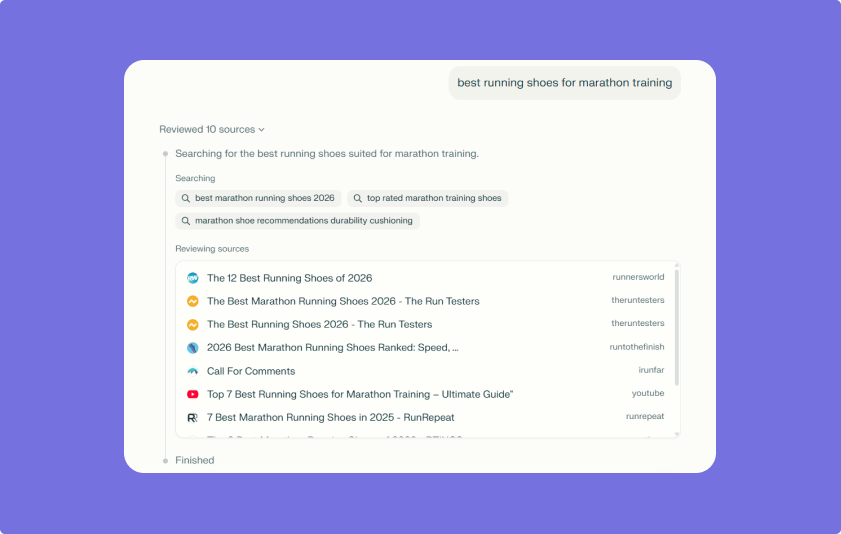
For example, if a user asks “What’s the best disability lawyer in Toronto?”, LLMs may expand this into sub-queries like “long-term disability claim process,” “how to appeal a denied disability claim,” or “cost of hiring a disability lawyer in Toronto.” As a result, firms that publish comprehensive, intent-driven content across these related topics are more likely to be surfaced in AI-generated citations.
This parallel retrieval strategy forces LLMs to pull evidence from multiple passages and documents rather than relying on a single high-ranking page. Google's Head of Search Elizabeth Reid explained this during the Google I/O 2025 keynote, noting that AI Mode "recognizes when a question needs advanced reasoning, calls on a custom version of Gemini to break the question into different subtopics, and issues a multitude of queries simultaneously on your behalf".
How LLMs Evaluate and Select Citation Sources
Once the query fan-out process generates multiple sub-queries, LLMs use a sophisticated multi-stage evaluation system to determine which sources merit citation. The selection process relies on several core dimensions that work together to identify the most authoritative and relevant content.
Authority plays a crucial role, with AI systems prioritizing sources with strong domain reputations, robust backlink profiles, and presence in knowledge graphs like Wikipedia. Research analyzing 150,000 AI citations reveals that Reddit and Wikipedia account for 40.1% and 26.3% of all LLM citations respectively, demonstrating the premium placed on community-trusted and encyclopedic sources.
Clarity and directness of answers significantly impact citation selection. LLMs prefer pages that answer questions in the first few paragraphs, use clear structured headings, define terms in plain language, and avoid unnecessary fluff. The content must also demonstrate semantic relevance across multiple sub-queries, as AI systems employ reciprocal rank fusion to boost sources that appear across multiple fan-out queries for consistency.
Additional quality signals include content freshness, intent alignment, domain credibility, and passage-level answerability. The systems also apply diversity constraints to ensure multiple perspectives rather than citing a single source repeatedly, and they evaluate whether passages support logical steps in the AI's reasoning chain.
Optimizing Your Website for Query Fan-Out Rankings
Understanding that visibility depends on ranking for fan-out queries rather than just primary keywords represents a paradigm shift in optimization strategy. Research analyzing over 173,000 URLs found that websites ranking for both main keywords and fan-out queries are 161% more likely to earn AI Overview citations compared to those ranking only for main keywords. Perhaps most surprisingly, ranking for fan-out queries alone makes websites 49% more likely to get cited than ranking exclusively for the main query.
To capitalize on this opportunity, websites should implement a comprehensive topic cluster strategy. Rather than creating a single lengthy blog post that touches lightly on multiple sub-topics, brands should develop a hub-and-spoke model with a pillar page addressing the broad query and detailed supporting pages answering specific sub-queries. This architecture signals to AI systems that your brand has answers to both the main question and the follow-up questions it will generate.
Creating Content That Targets AI-Generated Sub-Queries
The key to earning LLM citations lies in identifying and creating content for the specific sub-queries that AI systems generate during the fan-out process. When someone asks "What's the best CRM for small businesses?", LLMs don't search for that exact phrase—they fan out to related searches like "small business CRM features," "affordable CRM pricing," "CRM integration options," and "CRM user reviews".
Your content strategy should anticipate these fan-out patterns by creating dedicated sections or pages that directly answer each sub-query. For a main topic like "ChatGPT SEO services," develop content targeting fan-out queries such as "how ChatGPT retrieves information," "ChatGPT citation best practices," "tracking ChatGPT mentions," and "ChatGPT vs Google search differences". Each piece should provide direct, quotable answers in the opening paragraphs, use conversational Q&A formats, and structure information with clear headings that mirror natural language questions.
The correlation between fan-out query coverage and AI citations is 0.77, which is statistically very strong. This means comprehensive subtopic coverage matters more than ranking for a single head term. Build interconnected content clusters that address related questions, use cases, comparisons, and implementation details to maximize your visibility across the multiple searches LLMs execute. For a deeper dive into these strategies, refer to this AI search optimization guide.
Measuring Success in the AI Search Era
Traditional rank tracking no longer tells the complete story of search visibility. Success in AI search requires monitoring share of voice in AI Overviews and answer engines, identifying where your brand appears in citations versus where competitors dominate, and analyzing content gaps where you rank organically but fail to appear in AI responses. These gaps typically indicate missing comprehensive topical coverage that AI systems seek when generating answers.
The query fan-out method represents the future of search, moving away from basic keyword targeting into fluid, personalized, contextual search experiences. For brands willing to adapt their content strategies to align with how AI systems decompose and answer queries, this shift presents a significant opportunity to secure visibility in the next generation of search results.
About the Author: Muhammad Asad
Digital marketing strategist, SEO consultant, and technology writer contributing insights on search engine optimization, full-stack web development, and digital brand acceleration.